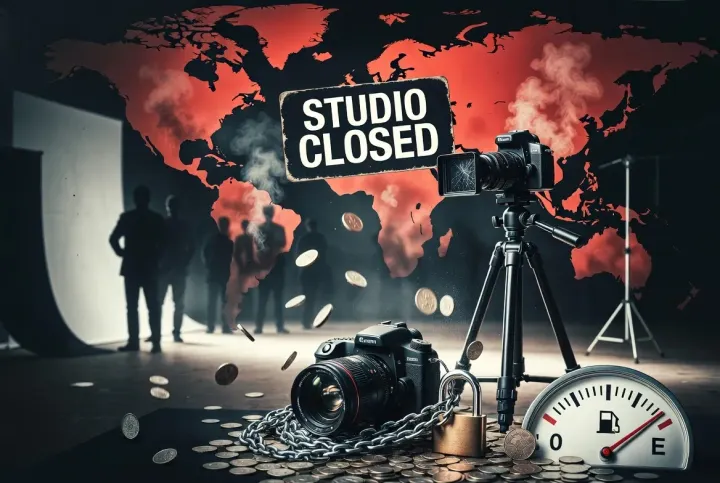
Why Do Cheap Lighting Brands Keep Failing in the U.S. Market?
Same terrible light, different logo

The Same Lights… Just a Different Logo?
If you’ve been watching the lighting space closely, you’ve probably noticed something strange. New brands keep entering the U.S. market with aggressive pricing, flashy specs, and bold claims—only to disappear quietly months later. Then, almost immediately, another “new” brand shows up with what looks suspiciously like the exact same product, just rebranded with a different name.
This has sparked a growing rumor in the photography industry: many of these budget lighting brands are not truly new companies at all, but recycled products from the same manufacturers, repackaged and relaunched under different labels. The result is a constant cycle of entry and exit that leaves photographers confused, frustrated, and unsure of what to trust.
Oversaturation Is Killing Trust
The biggest issue is not just quality—it’s oversaturation. The market is flooded with low-cost lighting options that promise high output, professional results, and advanced features, but often fail to deliver consistency or long-term reliability.
For photographers, lighting is not an accessory. It is a core tool. When a light fails during a shoot, it is not just an inconvenience—it directly impacts the final result, the client experience, and the photographer’s reputation. This is why trust matters more than ever.
As more of these short-lived brands appear and disappear, photographers are becoming increasingly cautious. Instead of experimenting with unknown names, many are moving back toward established brands with proven track records.
Why These Brands Struggle to Stay
There are several reasons why these lower-cost lighting brands struggle to maintain a presence in the U.S. market. First, quality control is often inconsistent. While some units may perform well, others fail quickly, creating mixed reviews and damaging credibility.
Second, customer support and service infrastructure are often lacking. When something breaks, photographers need quick solutions, not long delays or unresponsive support teams. Without a strong U.S.-based presence, many of these brands fail to meet expectations.
Third, brand identity is weak. When the same product is sold under multiple names, it becomes difficult for photographers to build loyalty. Over time, this erodes confidence not just in individual brands, but in the entire lower-cost segment of the market.
The Shift Toward Brands Photographers Actually Trust
As a result, many photographers are consolidating their gear choices around brands that have proven reliability and long-term support. Companies like Godox have managed to balance affordability with performance, becoming one of the most widely adopted lighting brands in the industry.
At the higher end, Profoto continues to dominate with consistent quality and strong ecosystem integration, while Nanlite has gained significant traction in the continuous lighting space, particularly among hybrid shooters and content creators.
There are also more niche but respected players like Maxima LED, an Italian company focusing on high-end continuous lighting solutions, which are becoming increasingly attractive for photographers seeking precision and build quality.
These brands are not just selling lights—they are selling reliability, support, and consistency. In an oversaturated market, that combination is becoming more valuable than ever.
The Quiet Rise of Continuous Lighting
Another major shift fueling this conversation is the growing popularity of continuous lighting. Traditionally, strobes dominated professional photography due to their power and efficiency. However, continuous lights are quickly closing the gap.
Modern LED technology has improved dramatically, offering high output, accurate color rendering, and flexible control. For photographers working in portrait, boudoir, video, or hybrid content creation, continuous lighting provides a major advantage—it allows you to see exactly what you are creating in real time.
This shift is not just about convenience. It is about control, consistency, and creative freedom.
Are Traditional Strobe Brands Falling Behind?
This transition toward continuous lighting may also explain another rumor circulating in the industry: some traditional strobe-focused brands are quietly pulling back from the U.S. market or reducing their presence.
Brands like Elinchrom, long known for high-quality strobe systems, have shown signs of restructuring and shifting focus internationally. While still respected, they are not dominating conversations the way they once did.
Some photographers believe this is because the market itself is changing. As more professionals move toward hybrid shooting—combining photo and video—the demand for powerful, versatile continuous lights is increasing. This puts pressure on brands that built their identity around strobes to adapt or risk losing relevance.
What This Means for the Future
The combination of over-saturation, declining trust in low-cost brands, and the rise of continuous lighting is creating a clear shift in the market. Photographers are no longer just looking for the cheapest option—they are looking for systems they can rely on long-term.
At the same time, the barrier to entry for lighting brands remains relatively low, which means the cycle of rebranded products is unlikely to disappear entirely. However, as photographers become more educated and selective, it will become increasingly difficult for these brands to gain traction.
Conclusion
The failure of many cheap lighting brands in the U.S. market is not just about quality—it is about trust, consistency, and long-term reliability. The repeated cycle of identical products under different names has created an environment where photographers are more cautious than ever.
At the same time, the industry is shifting toward continuous lighting, where brands like Godox, Nanlite, Profoto, and Maxima LED are establishing stronger positions.
If these trends continue, the market may become less about chasing new, inexpensive options and more about investing in reliable systems that support both photography and video. And in that environment, only the brands that deliver consistent performance and real value will survive.